Understanding Lateral Hip Pain: A Physiotherapist’s Guide to Gluteal Tendinopathy
Posted on 26th November 2025 by Paul FrankhamIf you’ve been experiencing pain on the outside of your hip, especially when walking, climbing stairs, or lying on your side, you may be dealing with a very common condition. Lateral hip pain is a very frequent reason people come to see a physiotherapist. A leading cause of this type of pain is gluteal tendinopathy. The good news: with the right understanding and a structured rehabilitation plan, most people make a strong recovery.
What Is Gluteal Tendinopathy?
Gluteal tendinopathy (often shortened to GT) is a condition affecting the tendons of two important hip muscles: the gluteus medius and gluteus minimus. These muscles help keep your pelvis level when you stand, walk, or run.
In the past, many people were told they had “trochanteric bursitis.” We now know that most lateral hip pain is not caused by inflammation of the bursa, but by overload or irritation of the gluteal tendons themselves.
GT is very common and can happen for a variety of reasons, including:
- Reduced strength or conditioning of the gluteal muscles
- Increased tension in nearby muscles like the tensor fascia lata (TFL)
- Repeated compression of the tendons when the hip moves into adduction (crossing legs, certain walking patterns, etc.)
How Does It Feel? Common Symptoms
People with GT often describe:
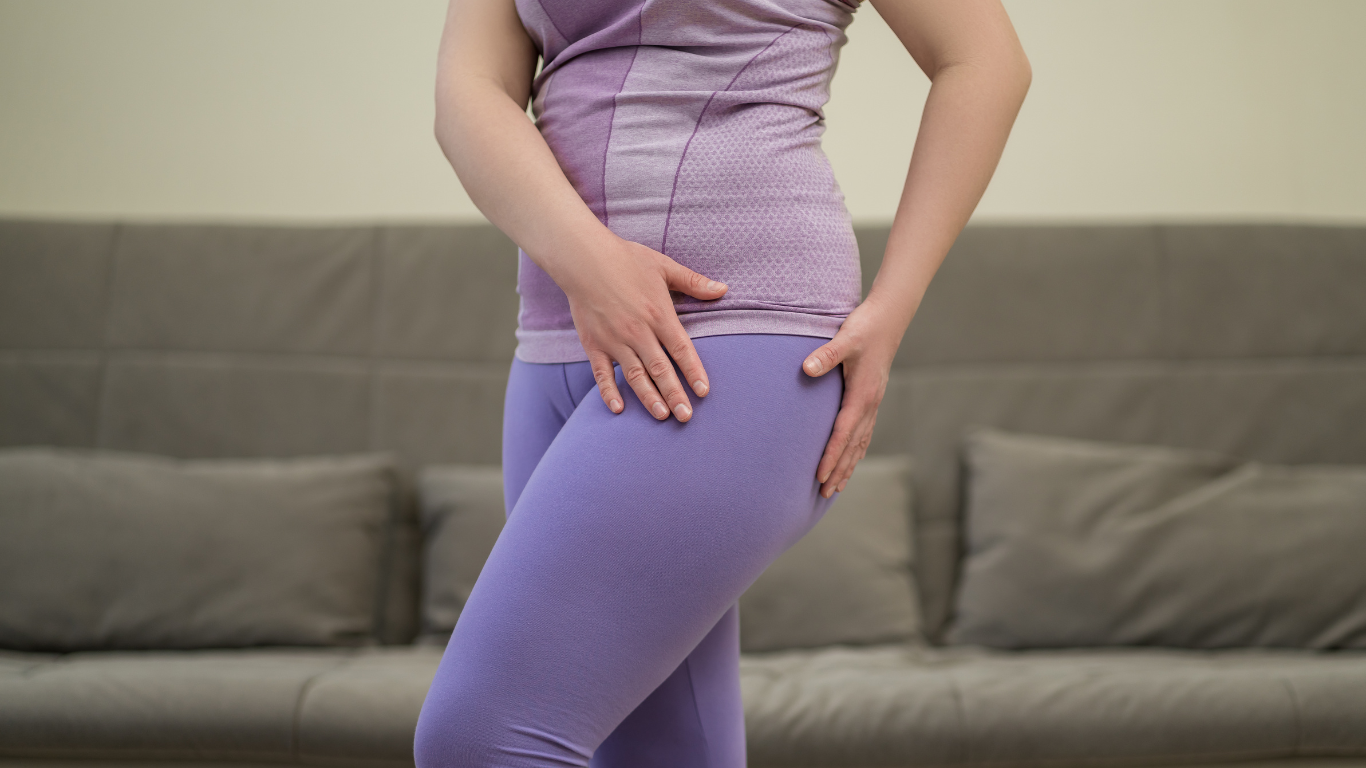
- Pain on the outer side of the hip
- Discomfort when walking, climbing stairs, or standing on one leg
- Pain lying on the affected side at night
- Pain rising from a low chair or sitting with crossed legs
- Tenderness when pressing the bony point of the outer hip (the greater trochanter)
These symptoms usually come on gradually rather than from a single injury.
How We Assess Lateral Hip Pain
A physiotherapist will talk through your symptoms and assess how your hip moves and loads. Helpful tests include:
- Gentle pressure over the outer hip
- Checking strength in the hip muscles
- A short single-leg standing test
These tests together help us confidently identify gluteal tendinopathy.
We also consider other possible causes of hip pain, such as hip osteoarthritis or referred pain from the lower back. Imaging (like MRI or ultrasound) is sometimes used, but tendon changes often appear even in people without pain, so your symptoms and movement patterns are the most important part of the diagnosis.
Treatment: What Actually Helps?
The strongest evidence shows that education, load management, and targeted exercise are the most effective ways to recover.
1. Education & Load Management
The first step is understanding how to reduce stress on the tendon while keeping active.
We encourage you to:
- Avoid crossing your legs or sitting in deep, low chairs
- Walk with your feet hip-width apart and roll gently from heel to toe
- On stairs, keep the knee aligned (don’t let it collapse inward) and use the handrail if needed
- Avoid lying on the painful side, and if lying on the opposite side, use a pillow between your knees
- Increase activity gradually, no more than 10% per week
2. Exercise Therapy
Exercise is the core of long-term recovery. We progress through three stages:
Stage 1: Pain-Calming Phase
These are gentle but strong holds that help settle pain and prepare the tendon for loading.
Example: pressing your leg outwards against a belt for 20-45 seconds, repeated 5 times with rest in between.
Stage 2: Strengthening
Once pain improves, we work on gradually strengthening the gluteal muscles through controlled movements. Exercises may include side-biased squats, monster walks and hip bridges.
Stage 3: Functional & Higher-Level Loading
For people who want to return to running, hiking, or sport, we introduce more dynamic exercises like small hops and loaded hip hinge movements. This helps the tendon adapt to real-life demands.
Exercise “Don’ts”
- Avoid hip adduction stretches (crossing legs or pulling the knee across the body) or exercises (e.g., side-lying clams) that compress tendons.
- Avoid prolonged side-lying on the affected hip.
- Avoid single-leg exercises in unsupported standing positions early in rehab.
- Don’t lump into running or plyometrics before you’re strong enough.
Other Treatment Options
Corticosteroid Injections
These can help with short-term pain but often don’t provide long-lasting improvement. Repeated injections may even weaken tendon healing. They are best reserved for cases where pain is too high to begin exercise.
Shockwave Therapy
Sometimes used alongside exercise in stubborn cases. It can help reduce pain for some people, but it’s not a stand-alone cure.
The Big Picture: Recovery Is Very Achievable
Gluteal tendinopathy responds extremely well to the right combination of education, load management, and progressive strengthening. Recovery is not about stopping activity, it’s about doing the right activity, the right amount, at the right time. With patience and consistency, most people return to comfortable walking, sleeping, and full activity without ongoing issues.
As physios, our goal is to help you understand your hip, build confidence in movement, and support you through each stage of rehabilitation.
Blog post written by Alena Zakharova, Pelvic Health Physiotherapist